
Why Manual Tarping Is Costing Your Fleet More Than You Think
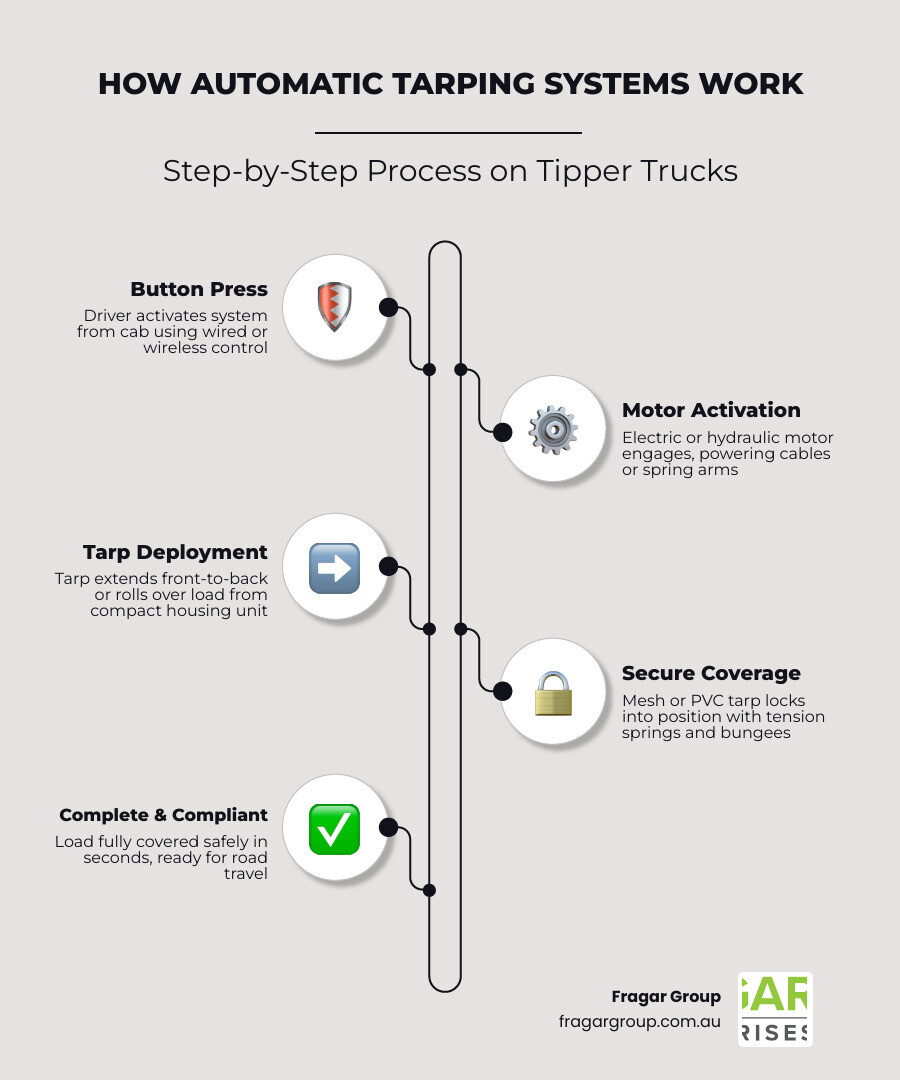
Automatic tarping systems trucks use motors, cables, or spring-loaded arms to cover and uncover loads at the push of a button. This keeps drivers safe, loads compliant, and your fleet moving.
Key system details include:
- Electric or hydraulic actuators extend a tarp across the truck body from a compact housing unit, either front-to-back or side-to-side.
- Main types include front-to-back cable-driven systems for large tippers, pull-out retractable systems for smaller trucks, and rollover systems.
- Benefits involve no climbing, no manual effort, faster load cycles, and compliance with Australian transport regulations.
- These systems suit tipper trucks, dump bodies, roll-offs, and hook-lift applications.
- Materials include PVC for waterproofing or mesh for ventilation and wind resistance.
- Quality systems are made in Australia, with a 2 to 5 day manufacturing turnaround.
Australian tipper operators are familiar with the challenges of manual tarping. A driver climbs onto a loaded tray, wrestles a tarp in the wind, and hopes for the best. It is slow, risky, and happens dozens of times a day across a fleet.
Manual tarping causes many on-the-job injuries in the transport industry. Drivers work at height in poor weather on equipment not designed for ease. Every minute spent tarping by hand is a minute the truck is stationary.
Automatic tarping changes this. One button is all it takes.
I am Gary Bulloch, founder of Fragar Group. With decades of experience building truck bodies and load containment solutions, I have seen how the right automatic tarping systems trucks can transform safety records and daily output. This guide explains how to choose the right system.
Why Switch to Automatic Tarping Systems Trucks?
Switching to an automated system is a strategic move for safety and efficiency. It addresses the three biggest challenges in the tipper industry: safety, speed, and legal requirements.
Driver safety is a priority in the Australian transport industry. Trucks can be as high as 4 metres. Asking a driver to climb up to secure a load is an invitation for a workplace injury claim. By using automatic tarping systems trucks, drivers stay firmly on the ground or inside the cab. This eliminates the risk of falls, which are a leading cause of downtime for operators in NSW.
Efficiency gains are significant. A tipper might load and unload ten to fifteen times in a shift. If manual tarping takes ten minutes per cycle, that is over two hours of dead time daily. Our Power Tarp System reduces this to seconds. Over a month, that efficiency allows for more loads per truck, directly boosting revenue.
Regulatory compliance is another factor. Australian road standards are strict about load containment. If debris like sand, stone, or soil escapes the tray, operators face heavy fines and potential liability. Automated systems ensure a tight, consistent seal every time, removing the human error factor of a poorly tied down manual tarp. High quality systems provide essential weather protection, keeping payloads dry during heavy rain and preventing wind from whipping away fine materials.
Essential Types of Automatic Tarping Systems for Trucks
Truck setups vary. A system for a small bobcat tipper differs significantly from one required for a multi-axle dog trailer. Understanding the mechanics helps you choose a system that will last for the life of the truck.
We specialise in two primary categories: Front-to-Back systems and Pull-Out designs. While some global systems use complex telescoping towers, we find that mechanical simplicity is the key to reliability in the rugged Australian environment.
A rollover tarp system (coming soon from Fragar) is a perfect example of mechanical load covering that works with the truck’s natural movement. It provides a side-to-side seal that is effective for loads that must stay dry.
Front-to-Back Automatic Tarping Systems Trucks
For large tippers and heavy duty hauling, the front-to-back cable-driven system is the industry standard. These systems use electric actuators to move the tarp along cables or tracks running the length of the tray.
These are built for the large trucks hauling gravel, asphalt, and construction debris across NSW. Cable drive systems are effective for handling heaped loads. Because the tarp moves from the front of the cab guard to the rear of the tailgate, it clears peaky loads that might obstruct a side-to-side system. We use high torque motors to ensure that even if the load is proud of the hungry boards, the tarp pulls over it smoothly.
Pull-Out and Rollover Automatic Tarping Systems Trucks
For smaller trucks or specific agricultural applications, pull-out and rollover systems offer a compact alternative.
Pull-out systems are often spring-loaded. They live in an aluminium housing at the front of the tray. When you need to cover the load, the driver pulls the tarp back, either manually or via a motor, and the spring tension keeps it taut. These are excellent for bobcat operators and landscaping trucks where space is limited.
Rollover systems are the best for waterproofing. They roll across the width of the truck. When we build these, we focus on the nesting design. This ensures the system does not add unnecessary height or width to the vehicle, keeping you compliant with NSW dimensions regulations.
Key Features and Sizing for Your Fleet
When selecting automatic tarping systems trucks, details matter. You must consider the tarp material, motor power, and how the system integrates with the truck body.
Choosing between mesh and PVC depends on the specific materials you haul.
| Feature | Mesh Tarps | PVC Tarps |
|---|---|---|
| Best For | Sand, Gravel, Rubbish | Asphalt, Grain, Fertiliser |
| Waterproofing | Breathable (Not Waterproof) | 100% Waterproof |
| Wind Resistance | High (Wind flows through) | Lower (Can “sail” in high wind) |
| Durability | Very High | High |
| Material Life | Up to 10 Years | Up to 10 Years |
Fragar Group uses Australian-made materials that offer a 10-year life. Our PVC is heavy duty 900gsm, designed to withstand the harsh Australian sun without cracking or fading.
Sizing is another critical factor. A tarp that is too short will not seal the tailgate, and one that is too wide will catch on branches or loading equipment. We look at the cab guard height, the total tray length, and the width of the hungry boards to create a custom fit. Our systems are typically powered by the vehicle’s 12V or 24V electrical system, using heavy duty wiring kits that prevent voltage drop over long trailers.
You can see examples of our custom fits and latest installs on our Facebook page, where we showcase how these systems look on everything from single axle tippers to triple road trains.
Installation and Maintenance for Maximum ROI
A stationary truck does not generate revenue. Fragar Group uses a turnkey process to ensure a quick turnaround. Once specs are confirmed, we aim to have your system manufactured within 2 to 5 days.
Because there’s no waiting on imported parts, your fleet can move to automated tarping with minimal downtime.
To get the best return on your investment, follow these maintenance steps:
- Routine Tensioning: Tarp cables and springs can stretch over the first few weeks of use. A quick adjustment keeps the system running smoothly.
- Debris Clearance: Keep the aluminium housing and tracks clear of rocks or mud.
- Motor Care: Our motors are sealed, but checking the electrical connections for corrosion is a smart move, especially if you haul salt or chemicals.
Because we manufacture our systems locally, replacement parts are always available. You will not be waiting weeks for a motor or a bracket to arrive from overseas.
Frequently Asked Questions about Automatic Tarping
How do automatic systems handle high winds and rain?
Material selection is critical for performance in adverse weather. Our wind-permeable mesh allows air to flow through the tarp rather than under it. This prevents the parachute effect that often damages inferior systems. For rain, our 100% waterproof PVC systems use secure bungees and tensioning springs to ensure water runs off the sides rather than pooling.
What is the typical weight added to the trailer?
We use lightweight, high strength aluminium for our housings and arms to minimise the impact on your payload. A full two-arm system typically adds approximately 550 to 600 lbs (about 250-270 kg) to the trailer. In the context of a 20-tonne payload, this is a negligible trade-off for the safety and speed you gain.
Can these systems be retrofitted to existing tippers?
Yes, we use universal mounting brackets and custom engineering to fit our automatic tarping systems trucks to almost any existing body.
Secure Your Load with Fragar Group Expertise
Choosing Fragar Group means investing in over a decade of expertise and the legacy of Gary Bulloch’s commitment to the Australian transport industry. We understand the grit and the grind of hauling because we have been in the trenches with you.
Our Australian-made systems are built for reliability, durability, and competitive pricing. We do not offer one size fits all solutions because every business is unique. From our durable PVC and mesh to our industry-leading 2 to 5 day turnaround, every part of our process keeps you moving.
Eliminate the need for climbing and improve hauling efficiency. You can browse our full range in the Fragar Group Catalogue to see the technical specs of our latest models.
Let us help you make manual tarping a thing of the past.
Need a tarp for your truck?
Pull-out tipper tarp kits: cut to your box width and delivered Australia-wide, from $1,199 inc GST. Order online
Retractable tarp systems: mesh or PVC, hand wind or electric, made to measure. Request a quote
Questions? Call 1300 850 413 (7am–5pm Mon–Fri) or email sales@fragargroup.com.au.


